The 7 syllable types help dyslexic readers because they turn long, intimidating words into predictable, sound-by-sound chunks. Most English words follow these patterns, and once a child knows the patterns, the vowel sounds stop being a mystery. I remember sitting at the kitchen table watching my child melt down over a word, and these patterns are what finally gave us a calm, step-by-step way through it.
What are the 7 syllable types?
A syllable type is a spelling pattern that signals how the vowel in that chunk of a word should sound. English looks chaotic to a struggling reader, but it is far more regular than it appears. Almost every syllable in English falls into one of seven categories, and each category comes with a reliable rule for the vowel. When a child can spot the pattern, they can predict the sound — and prediction is exactly what dyslexic readers need, because they don’t pick these patterns up by osmosis the way other children often do.
Syllable types are a core piece of structured literacy and the Orton-Gillingham approach. Instead of asking a child to memorize thousands of words by sight, we hand them a small toolkit of patterns that unlock thousands of words. Our Dyslexia Intervention Curriculum teaches these types in a deliberate sequence, with plenty of practice at each step.
What is each of the 7 syllable types?
Here are the seven types, with simple examples and why each one matters for your reader.
- Closed syllables (CVC, VC, CVCC): a single vowel followed by one or more consonants, which makes the vowel short — cat, dog, picnic, basket. These are the most common syllables in English, so recognizing them unlocks a huge number of words and builds the foundation for vowel sounds.
- Open syllables (CV, V): a syllable that ends in a vowel, giving the vowel its long sound — go, she, me, robot. They teach a child that vowels behave differently depending on their position, which adds flexibility for longer words.
- Silent ‘e’ (VCe, CVCe): a silent ‘e’ at the end makes the vowel before it long — bike, cake, tape, hope. This is one of the most common spelling patterns in English and supports both reading and spelling of multisyllabic words. Many children learn it as the “silent ‘e’ makes the vowel say its name” rule.
- R-controlled syllables (Vr, VCr): when a vowel is followed by an ‘r’, the ‘r’ changes the vowel’s sound — car, bird, fern, turn. These are genuinely tricky, so teaching the pattern explicitly reduces confusion and improves fluency.
- Consonant-le syllables (-ble, -tle, -dle): a final syllable made of a consonant plus ‘-le’ — table, little, simple, candle. This pattern helps with syllable division and reading those final, unstressed chunks at the ends of longer words.
- Vowel teams (VV, VVC): two vowels working together to make one sound — boat, rain, meat, sleep. They give a child a strategy for words that don’t follow the short or long vowel rules, which cuts down on guessing.
- Diphthong syllables (ou, ow, oi, oy): a complex vowel sound that glides from one vowel to another — cloud, foil, cow, toy. These help a child decode tricky vowel combinations and sharpen pronunciation and word recognition.
Why do syllable types help dyslexic readers?
Dyslexic learners often struggle with decoding because they don’t intuitively recognize the patterns inside words. Where a typical reader might absorb spelling patterns from exposure alone, a dyslexic reader usually needs those patterns named, modeled, and practiced directly. Teaching the 7 syllable types gives your child a systematic way to break any word into parts they can actually sound out.
This matters because it replaces a stressful strategy — guessing from the first letter or the picture on the page — with a dependable one. The result is steadier reading fluency and, just as importantly, more confidence. As a parent, watching my child gain that confidence with reading was an incredible relief. The syllable types also reinforce spelling, since the same patterns that help a child read a word help them write it.
- They give a predictable rule for the vowel sound in each chunk.
- They shrink long, scary words into manageable, readable parts.
- They support spelling as well as reading, because the patterns work both ways.
- They reduce guesswork, which lowers frustration and builds confidence.
How can I teach syllable types at home?
You don’t need to be a reading specialist to start. The key is to go one type at a time, in order, and give your child lots of practice before moving on. Begin with closed syllables, since they are the most common, then add open syllables, silent ‘e’, and so on. Keep sessions short and positive — a few minutes of focused practice beats a long, tense session every time.
- Introduce one type at a time. Name it, show two or three clear examples, and let your child find more.
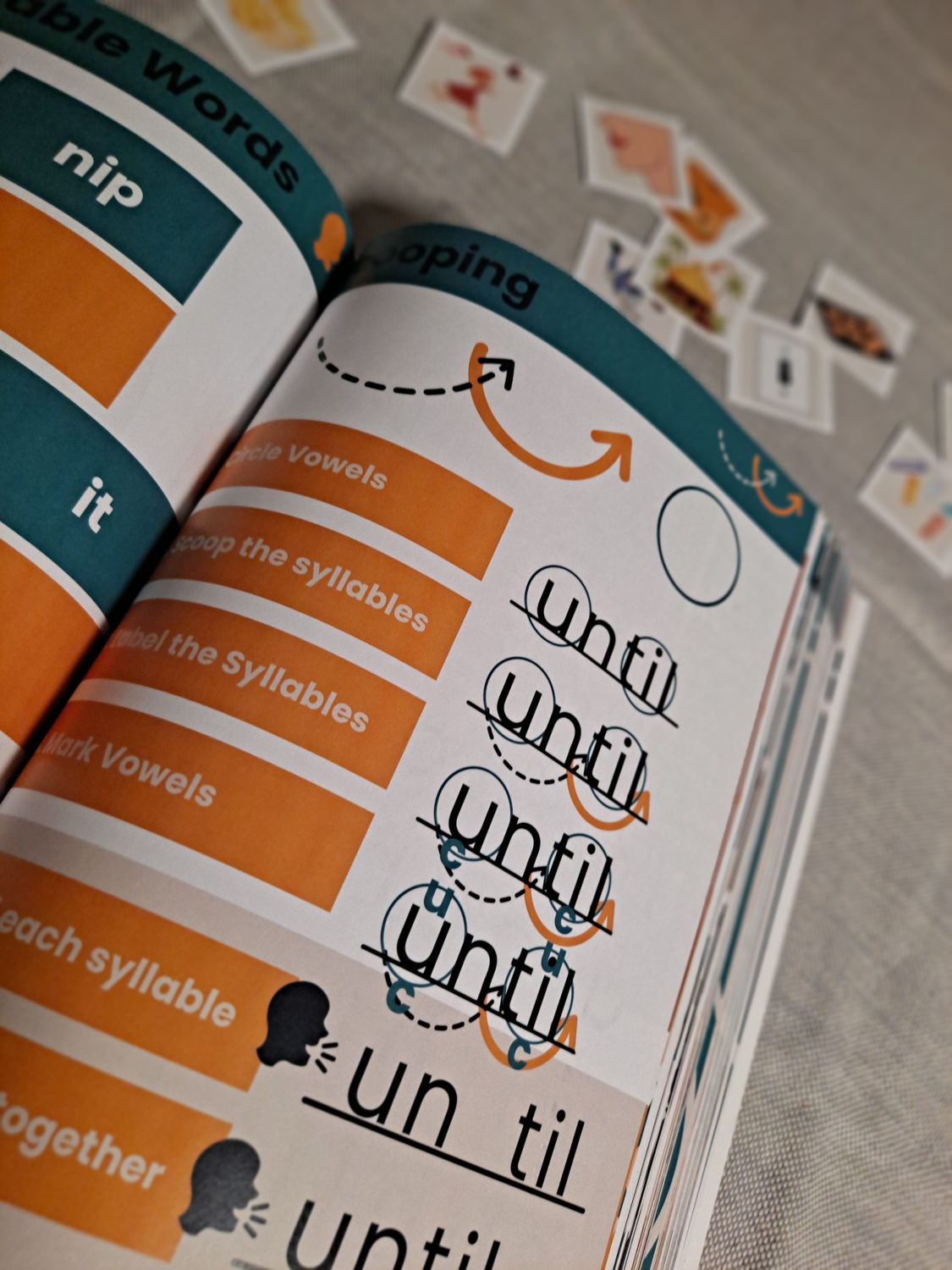
- Make it multisensory. Have your child tap out sounds, build words with letter tiles, or underline the vowel pattern with a colored pencil.
- Practice syllable division. When a word feels long, show how to split it into known types — rab·bit is two closed syllables, ta·ble is open plus consonant-le.
- Read real words and connected text. Move from isolated words to short sentences so the patterns stick in context.
If you’d like a structured path through all seven types, a hands-on tool helps. Our workbook on Amazon walks families through these patterns step by step. If you want to understand the broader approach behind syllable types, our posts on Orton-Gillingham at home and the Science of Reading are good next reads, and our guide to phonemic awareness covers the sound skills that come before decoding.
Frequently Asked Questions
What are the 7 syllable types?
The 7 syllable types are closed, open, silent 'e', r-controlled, consonant-le, vowel teams, and diphthongs. Each one is a spelling pattern that tells a reader what sound the vowel should make in that chunk of a word.
Why are syllable types important for dyslexic readers?
Dyslexic readers don't usually pick up spelling patterns on their own, so they benefit from having those patterns taught directly. The 7 syllable types give them a reliable system to break long words into sound-by-sound parts, which improves decoding accuracy, fluency, and confidence.
What is the most common syllable type?
Closed syllables are the most common type in English. They have a single vowel followed by one or more consonants, which makes the vowel short, as in cat, dog, and picnic. That's why most structured literacy programs teach them first.
At what age should I teach syllable types?
Syllable types are well suited to children ages 5 to 10 who are learning to decode. Start once your child knows their letter sounds, introduce one type at a time, and give plenty of practice before moving to the next.
Do I need special training to teach syllable types at home?
No. You can teach the 7 syllable types at home by introducing one pattern at a time, using multisensory practice, and reading real words and short sentences. A structured workbook or curriculum gives you the right order and pacing so you don't have to figure it out yourself.