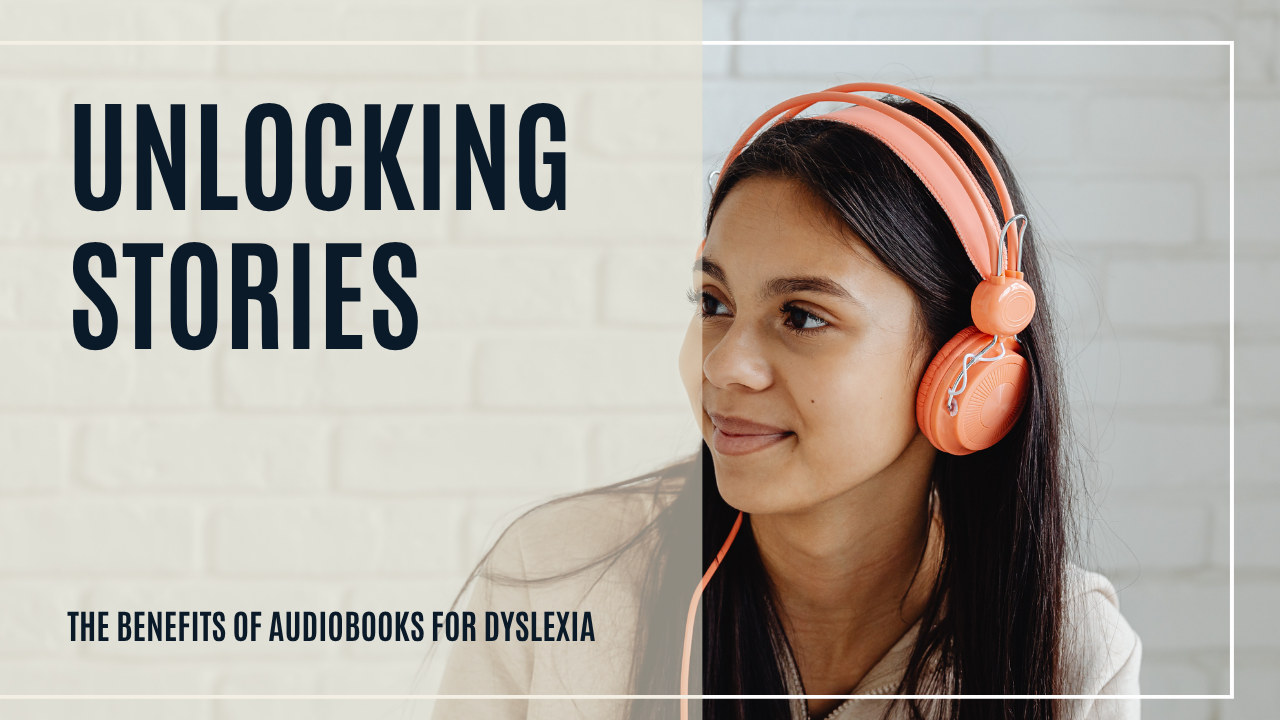
Audiobooks benefit children with dyslexia by letting them access the language, ideas, and joy of books without the daily struggle of decoding printed text. For a child who burns most of their mental energy sounding out each word, listening frees up that effort for comprehension, vocabulary, and simply loving stories. Audiobooks are not a shortcut—they are a bridge.
Why do audiobooks help children with dyslexia?
For children with dyslexia, reading printed text can be a daily struggle—but that does not mean they cannot fall in love with stories, learn from books, or build a rich vocabulary. Audiobooks are recordings of books read aloud by a narrator, giving a child access to the full text through listening rather than decoding. They open doors to learning, confidence, and imagination without the stress that often comes with reading words on a page.
- They build comprehension and vocabulary. When children listen, they are still processing complex language and ideas—even though they are not reading the words themselves. This exposure builds vocabulary, comprehension, and critical thinking, just like traditional reading.
- They remove decoding pressure. Dyslexic learners often spend so much mental energy decoding each word that they miss the meaning. Audiobooks let them focus on understanding and enjoying the content, which boosts confidence and motivation.
- They support fluency. Skilled narrators model fluent reading with proper pacing, expression, and tone. Hearing that can positively influence a child’s own oral reading and language development.
- They make learning enjoyable. Audiobooks turn frustrating reading experiences into positive ones. When children enjoy stories, they become more engaged, curious, and excited about learning.
- They encourage independence. Children can access books that match their intellectual level even when their reading level is lower, helping them keep pace with schoolwork and enjoy the same books as their peers.
Are audiobooks cheating or a shortcut?
No. A common worry is that listening “does not count” as real reading. But research on the science of reading separates two things: word recognition (decoding) and language comprehension. Audiobooks bypass the decoding barrier so a dyslexic child can keep developing the comprehension and vocabulary side of reading—the part that decoding struggles otherwise hold back. Listening is how children absorb story structure, build background knowledge, and grow the language skills that make decoding worthwhile in the first place.
It also matters for self-esteem. A child who is told over and over that a book is “too hard” can start to believe they are not smart, when in fact their thinking is far ahead of their decoding. Letting them listen to age-appropriate, idea-rich books keeps their confidence intact and their curiosity fed while the decoding skills catch up. Audiobooks pair naturally with other tools like text-to-speech and other forms of assistive technology that lower the same barrier.
Where can I find high-quality audiobooks?
There are many excellent resources—some free, some subscription-based. Here are some of the best options for families:
- Local libraries (via Libby or Hoopla). Most public libraries offer free access to thousands of audiobooks through digital apps like Libby and Hoopla. All you need is a library card. Best for families wanting free, high-quality books of all levels.
- Learning Ally. A nonprofit that provides audiobooks for students with reading disabilities, including dyslexia. Requires a school or individual membership and verification of a print disability. Best for educational use and school-aligned reading material.
- Audible. A paid subscription service with thousands of professionally narrated titles, including children’s and young adult literature. Best for access to popular and current books.
- Bookshare. Offers free access to audiobooks and other accessible formats for individuals with documented print disabilities. Requires membership and documentation. Best for students who need accommodations in school settings.
- Storynory and Lit2Go. Free websites with classic literature and original stories read aloud for children.
A practical tip: choose the format that fits the moment. Library apps like Libby and Hoopla are the easiest free starting point, while Learning Ally and Bookshare are worth setting up if your child has a documented print disability, because their catalogs are built for school-aligned reading. If you are also building a home library, our list of books for kids with dyslexia pairs well with audio versions so your child can listen and follow along in the same title.
How do I use audiobooks effectively at home?
A few simple habits turn passive listening into real literacy practice:
- Try paired reading. Let your child follow along with the printed text while listening to the audio. Seeing and hearing words at the same time reinforces letter-sound connections.
- Talk about the story. Ask questions, make predictions, and connect the book to real-life experiences to strengthen comprehension.
- Make it routine. Build audiobooks into car rides, quiet time, or bedtime so listening becomes a natural, low-pressure part of the day.
- Adjust the narration speed. Many apps let you slow the narrator down. For a younger or newer listener, a slightly slower pace makes it easier to follow along in the print text without falling behind.
Paired reading is especially powerful for a dyslexic learner. When your child hears a word spoken at the same moment they see it on the page, they get a clean model of how the printed letters map to sounds—reinforcing the same connections that explicit phonics instruction teaches. Over time, that repeated exposure can support both word recognition and reading fluency.
Should audiobooks replace reading instruction?
No—and this is the key point. Audiobooks give dyslexic learners access to the richness of language and academic content in a way that honors their strengths, but they do not teach a child to decode. Your child still needs explicit, systematic instruction to learn to read. A structured, multisensory approach grounded in Orton-Gillingham and structured literacy builds the decoding skills audiobooks cannot. Our Dyslexia Intervention Curriculum and the companion workbook on Amazon give parents a step-by-step, multisensory path to teach reading at home, no teaching experience required, while audiobooks keep the love of stories alive along the way.
Think of it as two jobs running in parallel. The curriculum does the slow, systematic work of building decoding skill, one phonics pattern at a time. Audiobooks make sure your child never loses access to rich stories, big ideas, and grade-level content while that work is underway. Together they protect both the skill and the joy—and for a child with dyslexia, keeping that joy intact is what makes the hard work of learning to read worth doing.
Frequently Asked Questions
Do audiobooks count as reading for a child with dyslexia?
Audiobooks count as building comprehension, vocabulary, and language skills—the comprehension side of reading. They do not replace decoding instruction, but they let a dyslexic child keep growing as a reader while they learn to decode.
Will audiobooks make my child a lazy reader?
No. Audiobooks remove decoding pressure so your child can focus on understanding and enjoying books. Used alongside structured reading instruction, they build motivation and confidence rather than replacing the skills your child is working to learn.
Where can I find free audiobooks for my child?
Most public libraries offer free audiobooks through apps like Libby and Hoopla with just a library card. Storynory and Lit2Go offer free read-aloud stories online, and Bookshare and Learning Ally provide free or membership access for students with documented print disabilities.
What is paired reading with audiobooks?
Paired reading means your child follows along in the printed book while listening to the narrated audio. Seeing and hearing the words together reinforces letter-sound connections and can support reading fluency over time.
At what age can my child start using audiobooks?
Children can benefit from audiobooks at any age, including the early years of dyslexia intervention. For ages 5 to 10, choose books that match your child's interest and intellectual level rather than their current reading level.