
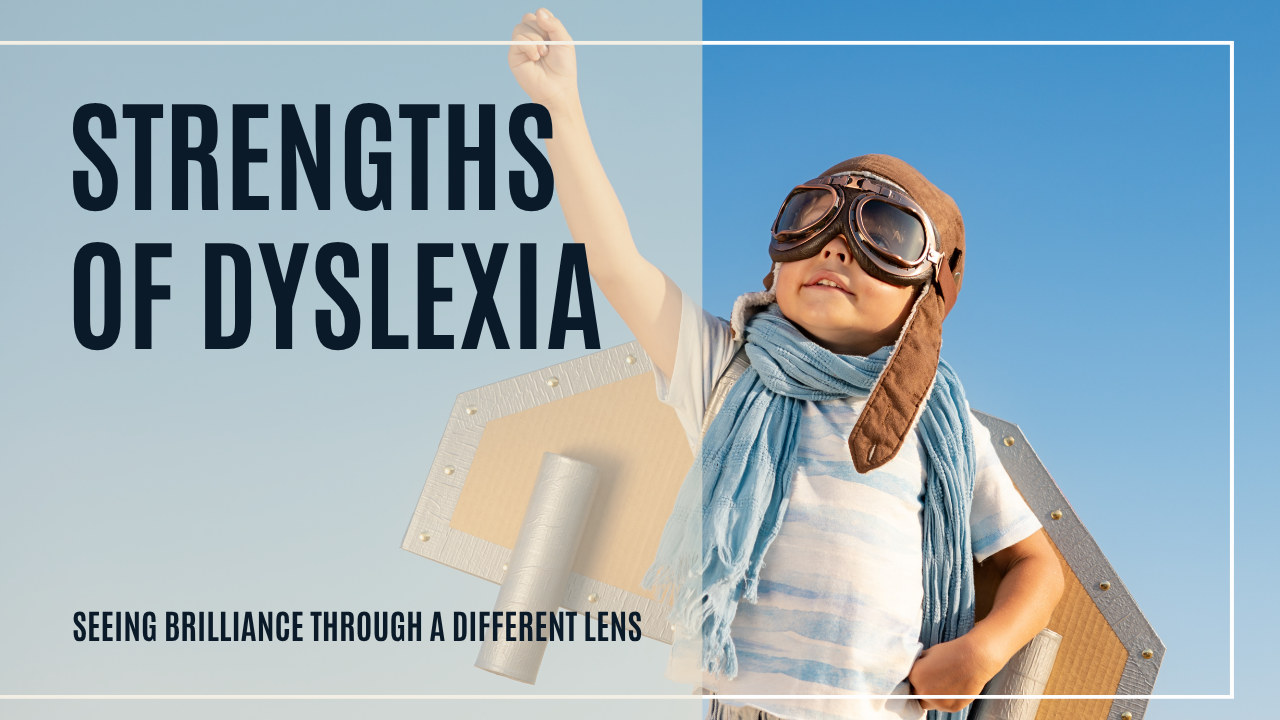
The strengths most often associated with dyslexia include big-picture thinking, creativity, strong visual-spatial reasoning, resilience, and empathy. Reading and spelling challenges are real, and they deserve direct, structured support—but they tell only part of the story. Dyslexia is not a sign of low intelligence or lack of effort. It’s a difference in how the brain processes language, and that same wiring frequently comes with a distinctive set of talents worth naming, nurturing, and celebrating.
What does it mean to take a strength-based view of dyslexia?
A strength-based approach supports a child where they struggle while deliberately building on what they already do well. When we focus only on what dyslexic students find hard, we miss the extraordinary gifts they bring to the table. That doesn’t mean ignoring the reading work—explicit, systematic instruction grounded in the Science of Reading and Orton-Gillingham principles is still essential. It means refusing to let a child see themselves as broken or behind, and instead helping them see themselves as innovative, capable, and full of potential.
The two goals work together. A child who is praised for the way they think, build, draw, or solve problems will walk into a hard reading lesson with more confidence and more willingness to persist. If you want to pair that mindset with structured instruction, our Dyslexia Intervention Curriculum is designed to support the skills a dyslexic reader needs while honoring the strengths they bring.
Why are many dyslexic learners strong big-picture thinkers?
Many individuals with dyslexia are naturally big-picture thinkers. Rather than focusing on step-by-step instructions, they tend to see patterns, connections, and possibilities others might miss. This kind of thinking is ideal for solving complex problems and coming up with original solutions, because it starts from the whole rather than the parts.
A number of successful entrepreneurs and inventors credit their dyslexia for their ability to think outside the box. By approaching problems from unexpected angles, dyslexic thinkers often thrive in careers that reward creativity and strategy—design, engineering, business, science, and the arts among them. For a child, this can look like:
- Connecting ideas across subjects that seem unrelated
- Spotting the “why” behind a problem before the details
- Coming up with several possible solutions instead of one
- Reasoning by analogy—“this is like that”—to understand something new
How does dyslexia connect to creativity?
Dyslexia and creativity often go hand in hand. Whether it’s through art, music, storytelling, or design, many dyslexic individuals have a natural ability to think creatively and express themselves in powerful ways. The strength is not just artistic talent—it’s a flexible, original way of approaching ideas that shows up wherever imagination is rewarded.
That’s why it matters to give dyslexic learners regular chances to shine outside of reading and writing. From drama and dance to drawing and building, these are areas where many dyslexic minds flourish—and where a struggling reader gets to feel competent and proud. Creative outlets also feed back into literacy: a child who loves telling stories aloud is building the narrative and vocabulary skills that reading and writing draw on. Pairing audiobooks with these interests can keep a child connected to rich stories while their decoding skills catch up, as we cover in our guide to audiobooks for dyslexia.
What is visual-spatial reasoning and why does it matter?
Visual-spatial reasoning is the ability to understand how objects relate to one another in space—to picture, rotate, and manipulate things in the mind’s eye. Dyslexic learners often excel here. This strength makes them good at tasks involving maps, puzzles, architecture, engineering, mechanics, and even video game design.
While reading text on a page might be difficult, these same students may be able to construct intricate 3D models in their minds, visualize outcomes before they happen, and navigate complex systems with ease. A child who takes apart a gadget to see how it works, builds elaborate structures, or has an uncanny sense of direction is showing you this strength in action. Naming it—“you’re really good at seeing how things fit together”—helps a child recognize a genuine talent that school doesn’t always measure.
How do resilience and empathy develop?
Let’s be honest—navigating a world built for linear thinkers can be tough. But through perseverance, dyslexic individuals often develop remarkable resilience. They become problem-solvers, out-of-the-box thinkers, and self-advocates who understand the value of hard work and persistence. The very effort that reading demands of them can build a kind of grit that serves them well long after the reading clicks.
Empathy frequently grows alongside that resilience. Because dyslexic children often know what it feels like to struggle or to feel different, many develop a deep sensitivity to the emotions of others. They tend to excel in relationships, teamwork, and collaborative environments—strengths that serve them not just in school but throughout life. These character traits aren’t a consolation prize for a hard road; they are real, durable assets. Protecting a child’s confidence while they work through reading challenges is central to this, something we explore in our article on dyslexia and self-esteem.
How can parents nurture these strengths at home?
You don’t need special training to build on your child’s strengths—you mostly need to notice them out loud and make room for them. A few practical ways to start:
- Name the strength specifically. “You figured out a different way to solve that” lands better than a general “good job.”
- Protect time for what they’re great at. Reading practice matters, but so do the building, drawing, music, and movement that let your child feel capable.
- Use strengths as a bridge. A spatial thinker can map out a story; a creative child can act out vocabulary; a big-picture thinker can preview the gist before tackling details.
- Separate the skill from the self. Reading is something your child is learning to do, not a verdict on who they are or how smart they are.
- Tell the fuller story. Let your child know that the way their brain works comes with real gifts, not just hard parts.
When we shift the narrative, we empower children with dyslexia to see themselves as innovative, capable, and full of potential—readers in progress who already have a great deal to offer. For families who want a deeper dive into the science behind a strengths-and-skills approach, our workbook on Amazon walks through structured practice you can do at home, and our guide to common dyslexia myths can help you push back on outdated assumptions you may encounter along the way.
Frequently Asked Questions
Is dyslexia a strength or a disability?
Dyslexia is best understood as a learning difference, not a measure of intelligence. It creates real challenges with reading and spelling that need structured support, but it also often comes with genuine strengths like big-picture thinking, creativity, and spatial reasoning. Both things are true at the same time.
What are the most common strengths associated with dyslexia?
The strengths most often described are big-picture thinking and problem-solving, creativity, strong visual-spatial reasoning, resilience, and empathy. Not every dyslexic child shows all of them, but many show several. These talents tend to flourish when a child has room to use them.
Does focusing on strengths mean ignoring reading problems?
No. A strength-based approach supports a child where they struggle and builds on what they do well. Explicit, systematic reading instruction grounded in the Science of Reading and Orton-Gillingham principles is still essential, alongside celebrating a child's talents.
How can I help my dyslexic child feel confident?
Name your child's strengths specifically, protect time for activities they excel at, and separate the skill of reading from their sense of self-worth. Confidence grows when a child regularly experiences being capable, not just when reading improves.
Why do so many entrepreneurs and inventors have dyslexia?
Many credit their dyslexia for an ability to see patterns, connect ideas, and approach problems from unexpected angles. Big-picture thinking and creative problem-solving are well suited to careers that reward innovation and strategy, which may help explain the pattern.